Web console
LiveOne command surface for operators, admins, and security teams.

Platform foundation
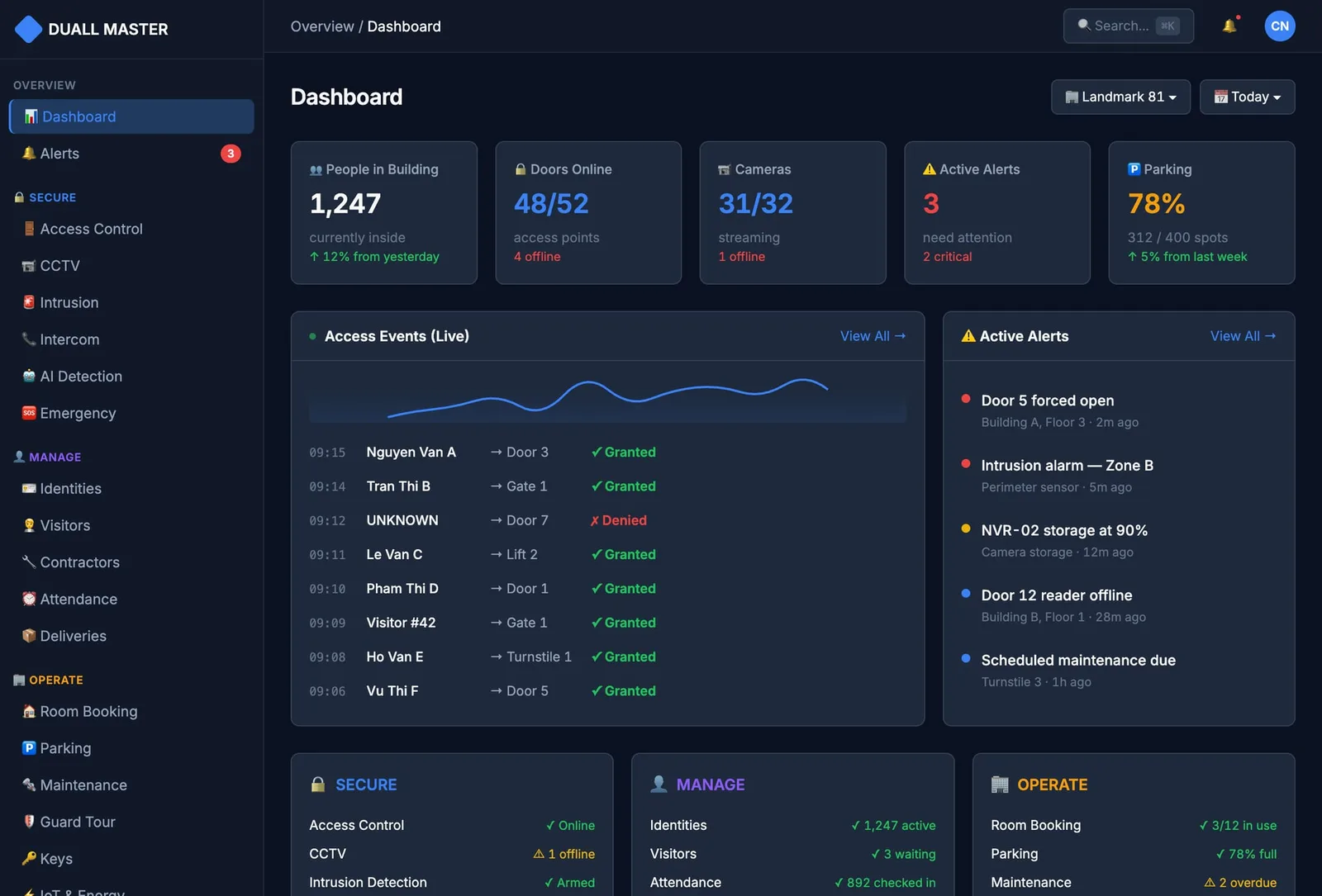
Duall Master is platform-based at the core and module-based in adoption. The same identity model, device fabric, NATS event spine, immutable audit hypertable, AI Assistant, and deployment controls back every module — so the modules can stay focused without becoming silos.
Foundation capabilities
Identity, devices, events, audit, AI, integrations, and deployment. Each module uses these instead of recreating its own — which is why adding a second or third module doesn't double your operational surface area.
Companies, tenants, users, roles, credentials, zones, and permissions stay aligned across modules.
Doors, gates, cameras, intercoms, terminals, and future endpoints connect to the same site model.
Access, visitor, parking, video, attendance, and operator signals resolve into one timeline.
Policy changes, overrides, reviews, and command actions remain traceable for operations and investigation.
Natural-language interface for the whole platform — operators ask in English or Tiếng Việt (Korean rolling out) and the assistant explains, previews, and executes safely with full audit.
APIs, webhooks, event flows, and partner connectors support phased modernization.
Cloud, on-premise, and hybrid models support different site policies and risk postures.
Platform architecture
Duall Master connects apps, modules, devices, data, integrations, and deployment controls through one platform foundation. The exact connectors and hosting model are validated per customer project.
01 / Apps and operators
One command surface for operators, admins, and security teams.
Role-specific workflows for admins, residents, guards, and staff.
Office, residential, school, factory, and campus views without splitting the platform.
02 / Product modules
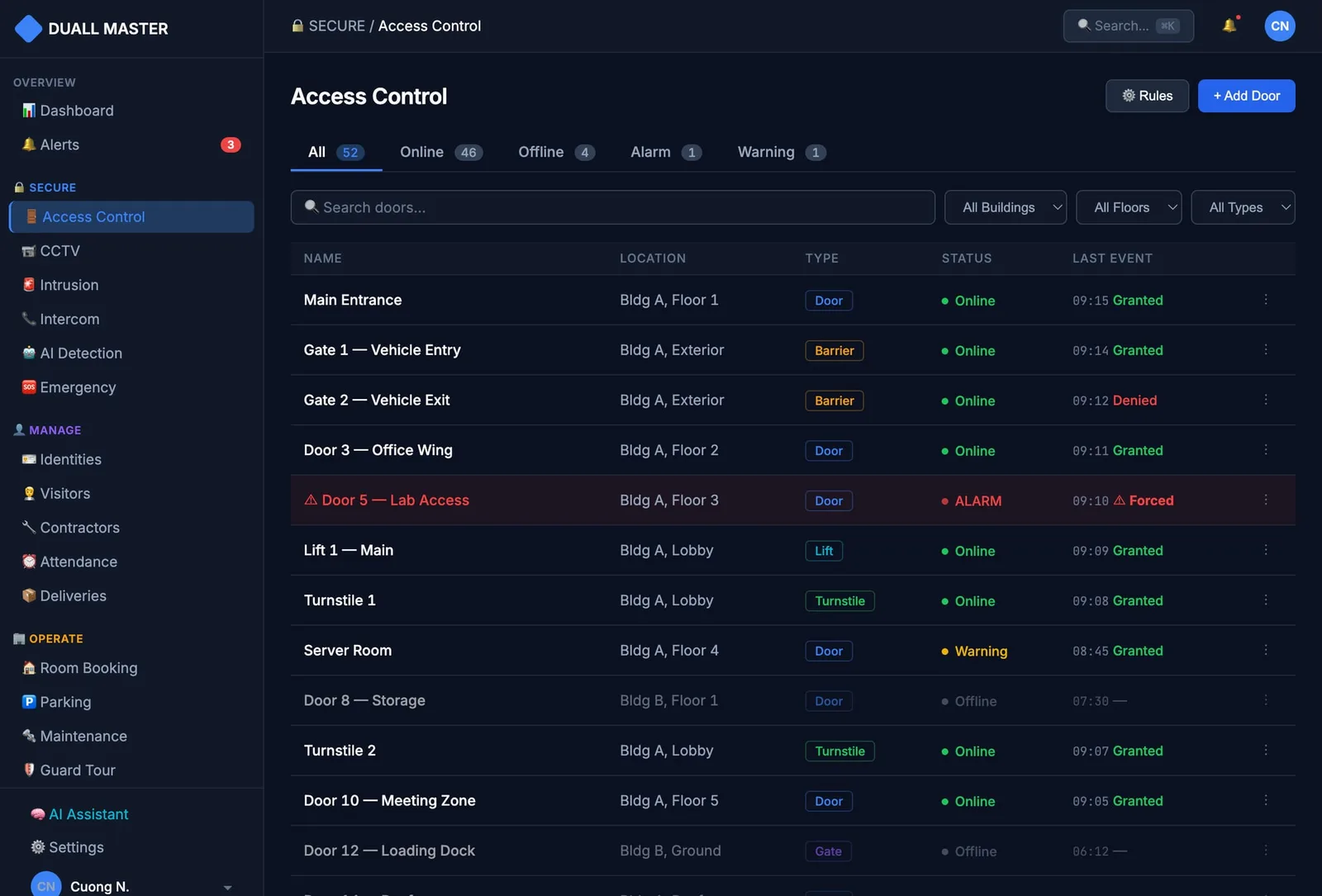
Doors, credentials, schedules, zones, and access history.
Invites, approvals, badges, hosts, and temporary access.
Clock events, shifts, leave, and workforce reporting.
Vehicles, sessions, gates, ANPR-fed flows, and site movement.
Cameras, live view, clips, and event-linked investigation.
Door-station and call workflows where required.
03 / Shared platform foundation
Tenants, companies, users, roles, credentials, and RBAC.
Buildings, floors, areas, doors, cameras, gates, and shared location context.
Device signals, module events, operator actions, and WebSocket updates.
Reviewable policy changes, overrides, access events, and operational history.
Gateway-controlled APIs, partner connectors, and project-specific integrations.
Cloud, on-premise, and hybrid rollout depending on customer risk posture.
04 / Devices, data, integrations, deployment
Terminals, controllers, doors, gates, lifts, and turnstiles.
Cameras, RTSP streams, clips, and door-station context.
HR, reporting, tenant apps, partner systems, and public APIs when validated.
Operational records, event history, media objects, cache, and tenant assets.
Hardware ecosystem
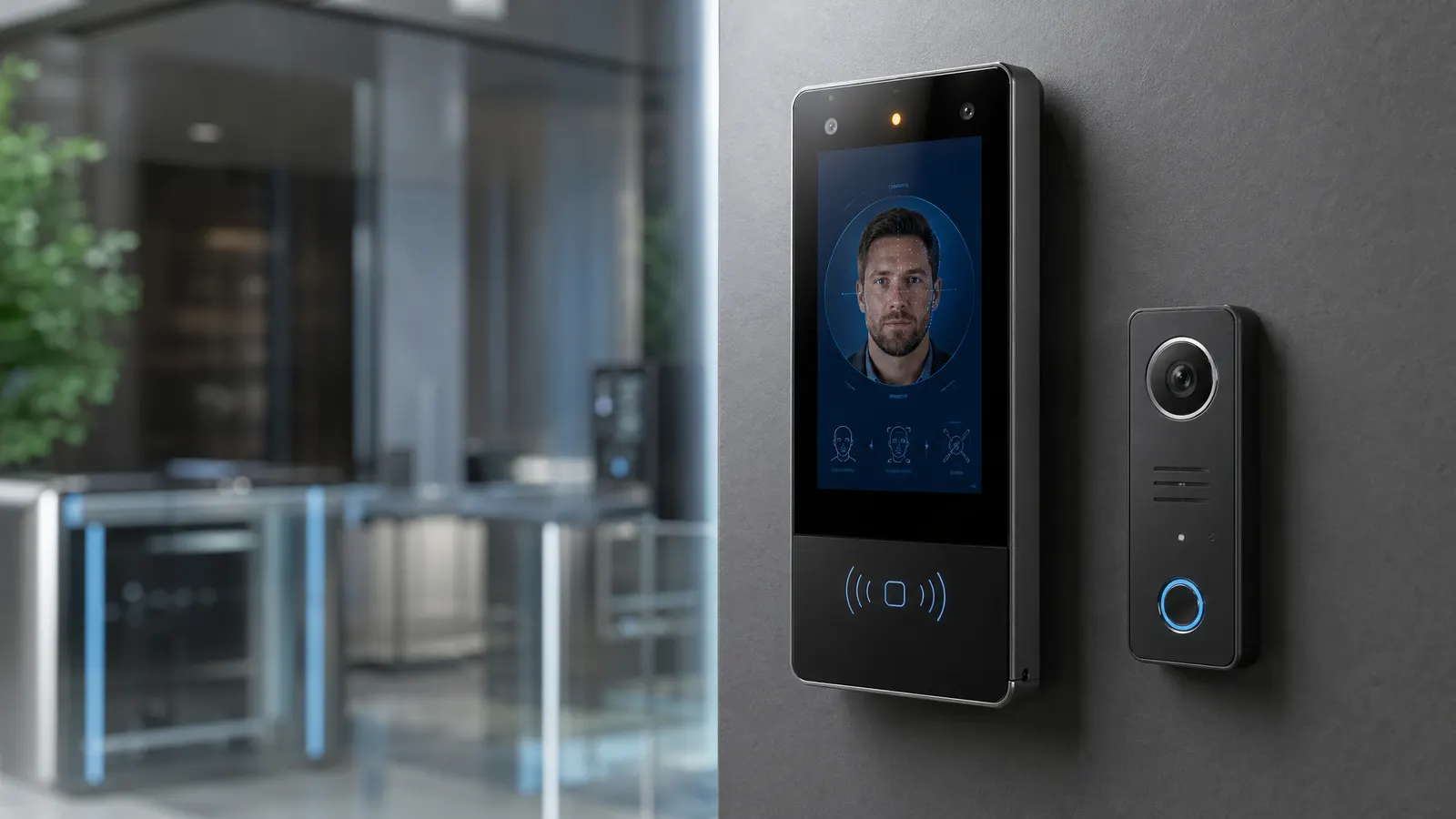
Duali access terminals and readers, plus compatible third-party cameras, intercoms, gates, lifts, turnstiles, parking equipment, sensors, and controllers feed into the same identity model, realtime event spine, operator UI, and audit hypertable described above.
Why it matters
One identity DB across users, credentials, roles, companies, and sites — add a module without re-onboarding people.
One realtime event spine (NATS JetStream) so cross-module activity resolves into one operating picture.
One operator UI so security, reception, and facilities do not switch tools to do their job.
One AI Assistant that reaches every module, with permissioned search, review, and summarization.
One deployment model that supports cloud, on-premise (with Ollama), and hybrid configurations.
One extension path so new modules and vertical experiences grow from the same core.
Cloud rollout for speed and portfolio reach
Faster start, managed operations, default Anthropic Claude LLM. Best for greenfield deployments.
On-premise control for sensitive sites
Full stack inside your perimeter — TimescaleDB, NATS, EMQX, MediaMTX, MinIO, Ollama. Required for residency-bound tenants.
Hybrid modernization when cutover risk matters
Control plane in cloud, sensitive workloads on-prem. Per-tenant LLM profile lets one portfolio mix postures.
Next step
Review how Duall Master connects modules, events, operators, integrations, and deployment requirements.